No universal scale
Grades compare pearls within a single seller's quality range—not across brands. Always ask what the grade actually means.
Pearl Education
A, AA, AAA — these letters mean nothing unless you know the standards behind them. This guide explains the four quality dimensions we evaluate, how grades differ across pearl types, and why we only sell AAA and above.
Letter grades are not universal across sellers. They describe relative quality within one seller's sourcing range. What one brand calls AAA, another may call AA+. The difference is in the standards they choose to uphold.
Pearl Education
Grades compare pearls within a single seller's quality range—not across brands. Always ask what the grade actually means.
AAA represents roughly the top 1–3% of a harvest. AA+ is still nice, but it's 3–10 times more common.
A grade letter is just a starting point. Look for close-up photos, disclosed standards, and a seller who explains what they reject.
Pearl Education
Why We Don't Sell AA or AA+
Many retailers stock AA and AA+ grades to offer lower price points. We made a deliberate choice to exclude them. Here is what that means for every pearl we sell.
| What you're buying | The Pearltica Standard (AAA / AAA+) | What others may sell (AA+ / AA) |
|---|---|---|
| Luster | Mirror-sharp: you can see your reflection clearly on the surface. Light bounces back with depth and brilliance. | Soft or satiny: reflections are blurry and diffused. The pearl looks white but lacks glow and inner depth. |
| Surface | 90–99% blemish-free. To the naked eye at conversation distance, the pearl appears virtually flawless. | Visible blemishes on 25%+ of the surface. Small pits, spots, or wrinkles are noticeable without magnification. |
| Shape | Perfectly round. Rolls straight. Looks balanced from every angle. This symmetry is the rarest form in nature. | Near-round to off-round. Slightly oval or egg-shaped. When strung together, creates an uneven, bumpy appearance. |
| Nacre | Thick and durable. Built to maintain its luster for generations with proper care. | Thin nacre. At risk of wearing down over a few years, eventually exposing the nucleus and losing its shine. |
Pearl Education
Each factor below plays a distinct role in how a pearl looks, wears, and ages. Click any one to jump directly to it—or scroll through all four for the complete picture.
The heartbeat of a pearl.
Luster is the single most important quality indicator for any pearl. It describes how light interacts with the pearl's surface and the crystalline nacre layers just beneath it. A pearl with exceptional luster produces a sharp, mirror-like reflection—you should be able to see the outline of your face or a window reflected on its surface.
The difference between AAA and AA+ luster is immediate. At AAA, the reflection is crisp and metallic—what the industry calls 'mirror luster.' At AA+, the reflection softens into what is described as 'satiny' or 'near-sharp.' The pearl still looks white and pretty, but it lacks the mesmerizing inner glow that makes a fine pearl truly captivating. It reflects light, but it doesn't hold it.
Luster is the hardest quality to fake in photos—and the one you will notice every single time you wear the piece. A pearl with weak luster may look acceptable in a heavily edited product shot, but in real life under natural light, the difference is unmistakable.
💡If you can only evaluate one thing—in person or from photos—make it luster. Sharp, mirror-like reflection is the signature of a pearl worth investing in.
Nature's signature, kept in check.
Every pearl is grown by a living mollusk, not manufactured in a factory. Virtually all pearls carry some trace of their organic origin—tiny pinpricks, subtle ripples, or faint natural markings. The question is not whether these exist. The question is how visible they are at a normal viewing distance of about 12 to 18 inches.
A AAA-grade pearl is at least 90–95% blemish-free to the naked eye. At conversation distance, it appears virtually flawless. An AA+ or AA-grade pearl typically has visible blemishes across 25% or more of its surface—small pits ('fish-eyes'), uneven skin ('wrinkling'), or chalky patches. These imperfections may seem minor at first, but over time they trap dirt and oils, gradually dulling the pearl's appearance.
We hand-select every pearl to ensure surface characteristics are minimal and do not compromise the piece's beauty or longevity. A pearl with superior surface quality doesn't just look better on day one—it stays looking better for decades.
💡Ask to see close-up photos taken in natural light, not studio retouching. An honest seller will show you the real surface—good and bad.
Round is rare. Round is intentional.
A perfectly round pearl is a statistical miracle. Mollusks have no biological incentive to produce perfect spheres—it requires the creature to deposit nacre evenly in all directions over an extended period, a process nature interrupts far more often than it completes. This is why round pearls command the highest prices: they represent the rarest outcome of an already rare process.
The difference between round and near-round is subtle to the untrained eye but unmistakable when pearls are worn as a strand. Near-round pearls have a slight oval or 'egg-shaped' tendency. When strung into a necklace, these small deviations compound, creating a bumpy, uneven look that lacks the sleek, flowing line of a perfectly matched round strand. A round pearl reflects light evenly from every angle. A near-round pearl does not.
For AAA grade, we select only perfectly round pearls—the rarest and most valuable shape category. For pendants and earrings featuring a single pearl as a focal point, near-round or symmetrical shapes like drops can be an intentional design choice. For strands, roundness matters at every position.
💡Round pearls are statistically rarer and priced accordingly. If you don't need perfect roundness, symmetrical shapes like drops and buttons offer excellent value with the same luster and surface quality.
The layer that gives pearls their depth—and their lifespan.
Nacre (pronounced NAY-ker) is the iridescent crystalline material that a mollusk secretes layer by layer around a nucleus to form a pearl. It is composed of microscopic calcium carbonate platelets bound by an organic protein—a structure that gives pearls their characteristic depth, iridescence, and durability.
Nacre thickness varies dramatically by pearl type. Akoya pearls typically have thinner nacre because they are cultivated in cooler waters over shorter periods of 10–18 months. South Sea and Tahitian pearls develop thick nacre naturally due to warmer waters and longer cultivation cycles of 2–4 years. Freshwater pearls are almost entirely solid nacre because they are tissue-nucleated rather than bead-nucleated.
Nacre thickness directly determines how long a pearl will last. Thin nacre—common in lower-grade Akoya pearls—can wear down over years of regular use, eventually exposing the dull bead nucleus beneath and causing the pearl to 'die' or develop a chalky, lifeless appearance. Thick nacre maintains its depth and glow for decades. A AAA-grade pearl with thick, well-layered nacre is not just more beautiful today—it is an heirloom in waiting.
💡For pieces you plan to wear regularly, nacre thickness is the difference between a pearl that lasts five years and one that lasts fifty.
A note on matching
For multi-pearl pieces like strands and bracelets, matching is a fifth quality dimension. It evaluates how consistently pearls work together in size, shape, color, overtone, and luster. Well-matched pearls create a seamless visual rhythm where no single pearl draws attention away from the whole. Our strands are matched to excellent standards—every pearl earns its place.
Pearl Education
Grading standards differ across pearl types. An Akoya AAA is not the same as a Tahitian AAA. Each pearl family has its own expectations for luster, surface, and shape. Use these tables as a reference when comparing pieces within a single pearl type.
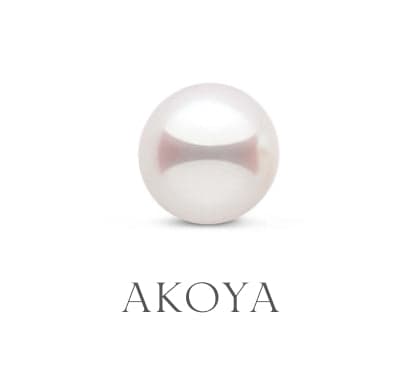
The classic pearl—valued for exceptional roundness and crisp, mirror-like luster. Cultured primarily in Japan and China in cooler waters.
| Grade | Luster | Surface | Shape | Nacre |
|---|---|---|---|---|
| AAA+ (Hanadama) | Mirror-sharp, metallic reflection | 98–100% blemish-free | Perfectly round | Extremely thick, heirloom quality |
| AAA | Bright and sharp, crisp edges | 95%+ blemish-free | Perfectly round | Visibly thick and durable |
| AA+ | Bright but slightly soft around edges | 85–95% blemish-free | Round to the eye | Medium thickness |
| A | Bright but hazy, diffused edges | 75–85% blemish-free | Round to near-round | Thin—risk of wear over time |
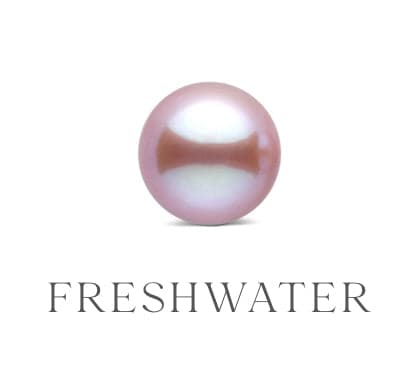
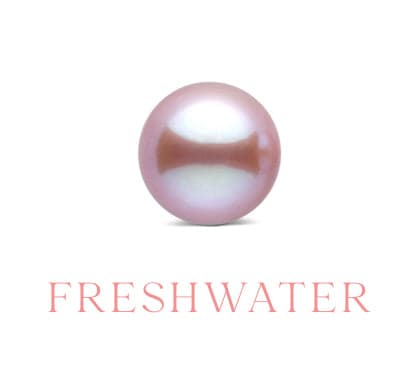
Versatile pearls with wide shape and color ranges. Tissue-nucleated, meaning they are almost entirely solid nacre—naturally durable.
| Grade | Luster | Surface | Shape | Nacre |
|---|---|---|---|---|
| AAA+ (Freshadama) | Mirror-sharp, metallic reflection | 98–100% blemish-free | Round | Solid nacre throughout |
| AAA | Bright and sharp, crisp edges | 95%+ blemish-free | Round to the eye | Solid nacre throughout |
| AA+ | Bright, near-sharp reflection | 85–95% blemish-free | Near-round | Solid nacre throughout |
| A | Bright with hazy edges | 75–85% blemish-free | Near-round to off-round | Solid nacre throughout |
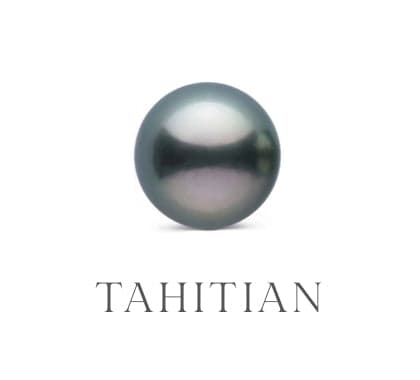
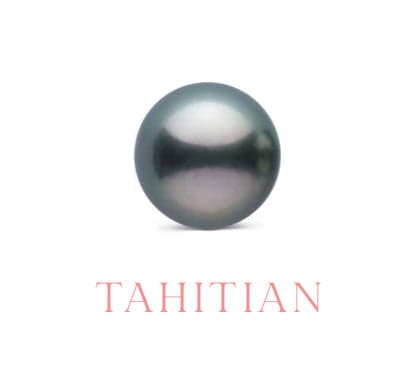
Naturally dark pearls from French Polynesia. Valued for bold body colors, peacock overtones, and individual character. Every strand is uniquely photographed.
| Grade | Luster | Surface | Shape | Nacre |
|---|---|---|---|---|
| AAA (Top Gem) | Excellent—mirror-like for this type | 90%+ blemish-free | Round to near-round | Thick, naturally durable |
| AA+ | Very high—bright and sharp | 80%+ blemish-free | Near-round | Thick |
| A | Medium to high—soft but visible glow | 70%+ blemish-free | Near-round to off-round | Medium to thick |
| B | Low to medium luster | Visible blemishes across surface | Off-round to baroque | Thin to medium |
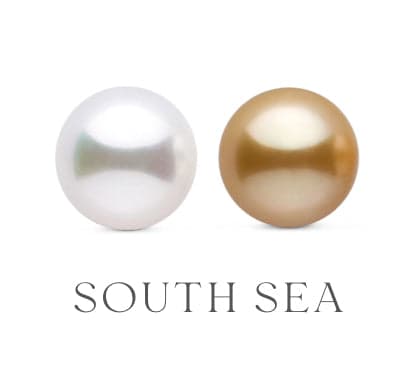
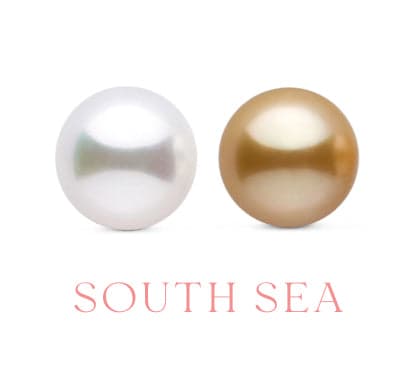
The largest cultured pearls (9–16mm), grown in warm waters over 2–4 year cycles. Colors range from optic white to deep golden. Known for a soft, satiny luster unique to this type.
| Grade | Luster | Surface | Shape | Nacre |
|---|---|---|---|---|
| AAA (Top Gem) | Excellent—deep, satiny glow | 90%+ blemish-free | Round to near-round | Very thick, heirloom quality |
| AA+ | Very high—bright and lustrous | 80%+ blemish-free | Near-round | Thick |
| A | Medium to high—soft but present | 70%+ blemish-free | Near-round to off-round | Medium to thick |
| B | Low to medium luster | Visible blemishes across surface | Off-round to baroque | Thin to medium |
“I am often asked why we don't offer a budget line of AA+ pearls. The answer is simple: I wouldn't wear them myself, so I won't sell them to you. When you buy a pearl, you are buying light. By rejecting AA and AA+ grades, I am ensuring that every Pearltica piece you own is a masterpiece of nature—not a compromise.”
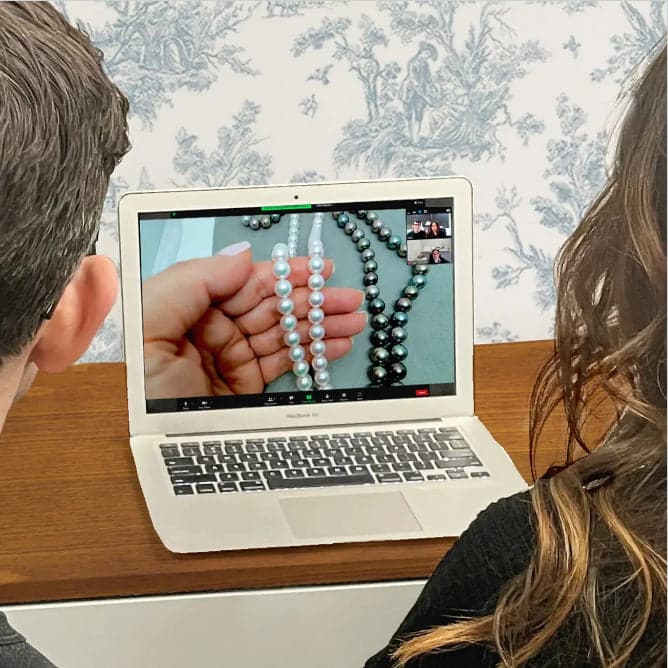
Different pearl families are evaluated through different expectations. What counts as 'excellent luster' for a South Sea pearl differs from what makes an Akoya exceptional. Use the right lens for the right pearl.
The classic pearl—valued for exceptional roundness and crisp, mirror-like luster. Cultured primarily in Japan and China in cooler waters.
Versatile pearls with wide shape and color ranges. Tissue-nucleated, meaning they are almost entirely solid nacre—naturally durable.
Naturally dark pearls from French Polynesia. Valued for bold body colors, peacock overtones, and individual character. Every strand is uniquely photographed.
The largest cultured pearls (9–16mm), grown in warm waters over 2–4 year cycles. Colors range from optic white to deep golden. Known for a soft, satiny luster unique to this type.
Look for close-up images in natural light, clearly disclosed standards, and a seller who explains what they reject—not just what they sell.
Browse collections